
9. Human Potential

The entry of psychologists, social workers, and other professional groups into the field of psychotherapy led to the rapid demedicalization of psychotherapeutic practice in the 1960s and beyond. So, too, did the emergence of a popular movement associated with such phrases as humanistic psychology, holistic health, human potential, and personal growth. Competing with traditional psychoanalytic psychotherapy for many of the same patient-clients, this new approach to mental health posed something of a threat to the psychiatric establishment. Looking for faster, cheaper results, consumers gravitated toward relatively brief and inexpensive interventions.
One of the most influential figures in the humanistic psychology movement was the founder of Gestalt therapy, Frederick (“Fritz”) Perls. Born into a Jewish family in Berlin, Perls was a psychoanalyst who later became “a sandal-wearing, white-bearded California guru.” Although he wore love beads, drove a sports car, and marched to the beat of his own drum, Perls was part of a larger therapeutic movement seeking to transcend two of psychology’s prevailing paradigms: behaviorism (the foundation of experimental psychology) and psychoanalysis. Like other psychologists in the humanistic camp, Perls stressed bold and honest self-expression, freedom from inhibition, and realization of one’s “human potential.” Humanistic psychologists spoke of the “self-actualizing” person (Abraham Maslow) and the innate “capacity for self-direction and self-responsibility” (Carl Rogers). Perls himself valued feeling over intellect, awareness over rational insight, and “the existential, experiential here and now” over the “mind fucking” abstractions of psychoanalysis.1


Fritz Perls and Gestalt therapy gained prominence in the late 1960s, when Perls became a fixture at the Esalen Institute, a hot springs and retreat center on the Central California coast. Here, Gestalt became for the growth-seeking counterculture what psychoanalysis had been for a previous generation. Contrasting sharply with the uptight, hyperintellectual psychoanalysts, the new Gestalt therapists were animated and informal. Urging his clients to experience the present without analyzing the past, Perls used outlandish and sometimes harsh tactics to incite his clients. People took Perls’s “hot seat” only when they were ready to “work on themselves.”
Over 4,000 people traveled to Esalen’s Big Sur hot springs in 1967 alone. That summer, Murphy opened a second Esalen office in San Francisco. In its first two months, the San Francisco program enrolled over 10,000 people in seminars and workshops, at locations ranging from Grace Cathedral on Nob Hill to the Berkeley Center for Human Interaction. In the therapeutic marketplace, the human potential movement competed with psychiatry for the dollars of the mentally distressed.2
Even so, psychiatry was not always at odds with the human potential movement. John Downing, director of the San Mateo County Mental Health Services, thought places like Esalen benefited “those who [were] too well-adjusted, too tight and controlled.”3 James Yandell, a doctor at U.C. Berkeley’s health services, expressed a point of view shared by many mental health professionals: “I’m willing to read or hear about anything that makes sense to me and has some value, and I don’t care what school it comes out of.”4 In fact, Esalen’s connections to mainstream academic and professional communities were strong. Each year, hundreds of counselors and therapists, including doctors, enrolled in Esalen workshops. Esalen instructors spoke at hospitals, medical schools, and universities.5 In this way, Gestalt and other techniques made their way into the psychiatric mainstream.
Esalen’s San Francisco office was located on the 1700 block of Union Street, the heart of the city’s human-potential business district. On the same block were the Gestalt Institute, the Unicorn Ashram, and the Eductivism school of philosophy. Joining them on this same block in 1974 was a three-year-old business known as “est,” short for Erhard Seminars Training. Werner Erhard was the name adopted by est’s founder, Jack Rosenberg, a Philadelphia used-car salesman who abandoned his wife and four children to make a life for himself in the San Francisco Bay Area. For a time, the handsome Erhard worked as a door-to-door book sales manager. On a fateful day in 1970, Erhard enrolled in a seminar on “Mind Dynamics” at a local Holiday Inn. Headquartered in San Rafael, Mind Dynamics purported to teach students how to achieve their personal goals by mastering the brain’s alpha waves.6
Mind Dynamics brought mass-marketing sales techniques to the human potential movement. Sensing an opportunity, Erhard paid a $1,000 training fee and began teaching Mind Dynamics courses. During this time, Erhard explored ways to improve upon the Mind Dynamics business plan: he studied marketing strategies, recruiting tactics, and pyramid schemes. In addition, Erhard immersed himself in the teachings of Dale Carnegie, the Gestalt therapy of Fritz Perls, and “the modern science of Dianetics” promulgated by L. Ron Hubbard. In 1971, after breaking with Mind Dynamics, Erhard conducted the first Erhard Seminars Training (est) in San Francisco. Largely by word of mouth, the workshops drew thousands of people. By 1974 Erhard had sold $3.4 million in est sessions.7
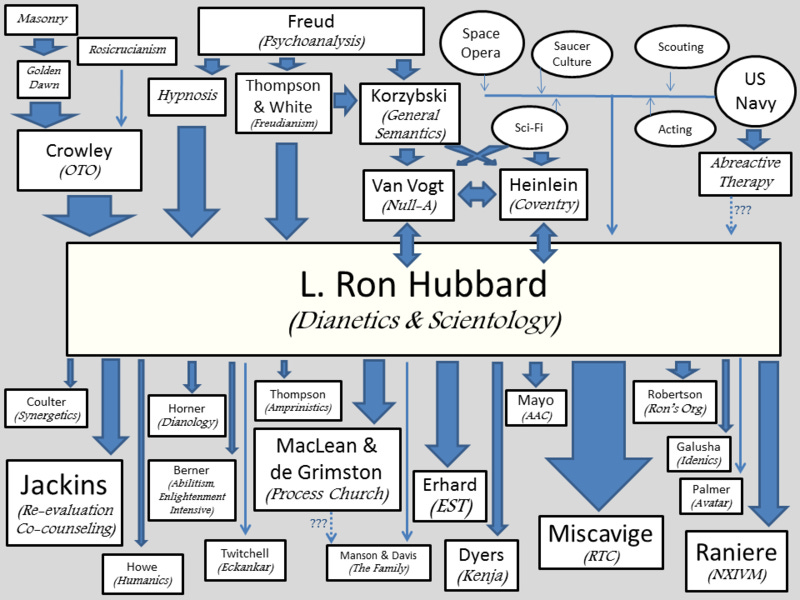
On consecutive weekends, est trainees would gather in hotel ballrooms for sessions lasting from early morning to late at night. Over the course of a session, Erhard would deliver long, logic-defying lecturers and invite responses from the audience. One of Erhard’s core messages was that there are no victims in the world: everyone creates and is therefore responsible for his or her own reality. “During est’s early years,” notes one journalist, “Erhard sometimes went so far as to assert that six million Jews had been ‘responsible’ for their own deaths during the Holocaust.” Taking a page from Gestalt therapy, Erhard instructed his trainees to “experience” personal transformation by suspending the habit of rational thought. Participants who attempted to make sense of the seminar were hectored for not “getting it.”8
Est seminars encouraged graduates to go out and recruit new seminar participants. By October 1974, there were 25,000 est graduates in cities such as San Francisco, New York City, Los Angeles, Honolulu, and Aspen. Curiosity about est extended even to the psychiatrists. Erhard filled the auditorium at the Langley Porter Neuropsychiatric Institute when he presented grand rounds. At least one Langley Porter affiliate— a research psychiatrist investigating the brain waves of schizophrenics—was himself an est fanatic. When Erhard created an est advisory board in 1973, its first chairman was Dr. Philip R. Lee, the former UCSF chancellor and an early est supporter.9
One effect of the human potential movement was to revive long-standing anxieties about psychiatry’s own scientific status. Even at the apex of psychoanalytic psychiatry, psychiatrists had been continually challenged to defend the scientific status of psychoanalysis. Psychoanalysis, after all, did not look like other medical interventions, and it lacked many of the qualities associated with twentieth-century medical science. The human potential movement posed a fundamental question: were techniques such as primal therapy and est as effective as psychiatric techniques? Science-minded psychiatrists lamented the profession’s “susceptibility to fads and its readiness to board the newest bandwagon.”10
Around the same time Michael Murphy and Richard Price were founding the Esalen Institute on the California coast, San Francisco’s Langley Porter Clinic was renamed the Langley Porter Neuropsychiatric Institute (LPNI). As the human potential movement offered consumers an alternative to conventional medicine, there was a resurgence of interest in methodological rigor and the biological and behavioral sciences in departments of psychiatry. By the 1960s the Langley Porter Neuropsychiatric Institute had become home to 58 researchers, funded mostly through federal grants and other outside sources. Enoch Callaway, a research psychiatrist, oversaw LPNI’s expanding research program. Computers and electronic equipment crowded the third floor of the Institute, where Callaway’s group studied brain wave patterns using an oscilloscope.11
Meanwhile, Stanford made the decision to relocate its school of medicine from San Francisco to its Palo Alto campus. David A. Hamburg, the chief of the Adult Psychiatry Branch at the National Institute of Mental Health, was appointed to head the department. “Traditionally,” Hamburg once said, “our field has been vulnerable to sweeping pronouncements and unsubstantiated claims, with authority often substituting for evidence.”12 Hamburg was an expert on the biology and psychology of human stress responses; he conceived of psychiatry as a biological science of behavior. By the mid 1960s Hamburg had assembled a team of cutting-edge researchers at Stanford. During Hamburg’s ten years as chief, the department of psychiatry became one of the highest grant-earning departments at Stanford.
For decades, controlled studies of psychotherapy had been suggesting that psychotherapy had positive outcomes. But mental health programs, especially psychotherapy, were notoriously difficult to evaluate, and it wasn’t clear to anyone how and why psychotherapy worked. To study the process of therapeutic change, a research group at Mount Zion designed a methodology for testing psychodynamic theories. Initiated by Joseph Weiss, M.D., and Harold Sampson, Ph.D., in the early 1970s, the Mount Zion Psychotherapy Research Group focused on the theory that the analysis of an unconscious defense mechanism— in this case, the so-called “undoing” defense— gradually enabled a patient to access “warded-off” thoughts and feelings. Using an analyst’s handwritten notes as data, Weiss’s group aimed to verify that changes in a patient’s defense mechanism corresponded to the emergence of strong emotions.13
Controlled studies of psychoanalysis and psychoanalytic psychotherapy had economic as well as intellectual significance. As federal, state, and local tax dollars were spent to provide psychiatric care, officials asked for evidence that public funds were being wisely used. Program administrators and officials at all levels insisted that efforts be made to measure treatment outcomes and assess cost effectiveness.
But psychotherapy research did not generate the same level of enthusiasm that biological psychiatry did. The emergence of psychopharmacology in the 1950s was associated with the drug chlorpromazine, an antipsychotic agent marketed as Thorazine. The success of Thorazine alone had far-reaching consequences: for one, it sealed lobotomy’s fate, while other techniques—hydrotherapy, insulin shock therapy, electric shock therapy— fell out of favor. Even before Ronald Reagan became California governor in 1967, state and federal policies had downsized the state mental hospitals and assigned more responsibilities to county-run community programs. By the time Reagan arrived in Sacramento, the California State mental hospital census had fallen from 37,500 patients in 1959 to 22,000 patients. Under new rules designed to minimize involuntary hospitalization in California, the state hospital population fell to 6,000 patients at the end of Reagan’s second term as governor.14
Supported by federal agencies and private foundations, biological and biochemical research thrived at academic institutions such as Stanford. With the identification of serotonin as a neurotransmitter in the 1930s and 1940s, a “serotonin hypothesis” of depression emerged in the 1960s, based on studies of the biochemical response of depressed patients to antidepressant drugs.15 The clinical effects of medications such as as lithium, chlorpromazine, imipramine, and diazepam (better known as Valium) raised compelling questions about the relation between mental illness and brain chemistry. Well-controlled studies— double blind, randomized, placebo controlled studies involving large numbers of patients— quickly became a hallmark of psychiatric science.
By 1970, one out of four adult men in San Francisco and two out of five adult women had used a prescription psychiatric drug in the preceding year. Around the same time, a nationwide survey found that one out of five Americans— 13 percent of men, 29 percent of women— had used a prescription psychiatric drug during the preceding year. Miltown, Librium, Valium and other tranquilizers were the most widely used class of prescription psychiatric drugs in 1970. Fifty years later, the nationwide percentage remained about the same. According to the National Center for Health Statistics, 16.5% of US adults surveyed in 2020 had taken a prescription psychiatric medication during the preceding year.16 Today, however, the best-selling psychiatric medications are Zoloft, Lexapro, and Wellbutrin; antidepressants are the most widely used class of psychiatric drugs.
A note on sources: Complete citations can be found in Justin Suran, "Toward an Illusionless City: The Province of Psychiatry in Twentieth-century San Francisco" (Ph.D. diss., Univ. of California, Berkeley, 2003).
Martin Gross, The Psychological Society: A Critical Analysis of Psychiatry, Psychotherapy, Psychoanalysis, and the Psychological Revolution (New York: Random House, 1978), 294-97; Don Lattin, “Esalen Bares Its Soul,” San Francisco Chronicle, 16 June 2002; Walter Truett Anderson, The Upstart Spring: Esalen and the American Awakening (Menlo Park: Addison-Wesley, 1983); on humanistic psychology, see Ellen Herman, The Romance of American Psychology: Political Culture in the Age of Experts (Berkeley and Los Angeles: Univ. of California Press, 1995), 264-75.
Stephen A. Appelbaum, Out in Inner Space: A Psychoanalyst Explores the New Therapies (Garden City, N.Y.: Anchor Press/Doubleday, 1979), 475-501; Gary Yontef, “Gestalt Therapy: An Introduction,” at http://www.gestalt.org; Anderson, Upstart Spring, 183.
Leo E. Litwak, “Joy Is the Prize,” The New York Times Magazine (31 Dec. 1967): 8, 28.
A.L. Pierovich, “Psychiatric Treatment on the Berkeley Campus,” California Monthly 78, no. 3 (Nov. 1967): 11.
Litwak, “Joy Is the Prize,” 8, 28. Many Esalen affiliates had conventionally prestigious bona fides. Dr. William Schutz, whose open encounter groups used sensory awareness to develop “the ability to experience joy,” taught at Harvard, Berkeley, and the Albert Einstein College of Medicine. Virginia Satir earned her graduate degree from the School of Social Service Administration at the University of Chicago. Serving with her on Esalen’s executive committee were people like Frank Barron, the U.C. Berkeley psychologist, creativity researcher, and co-founder of the Harvard Psilocybin Project.
Steven Pressman, Outrageous Betrayal: The Dark Journey of Werner Erhard from Est to Exile (New York: St. Martin’s Press, 1993), 57, 80.
Pressman, Outrageous Betrayal, 35-37, 50, 83.
Pressman, Outrageous Betrayal, 70, 72.
Est has been rebranded as the Landmark Forum (“the Forum”). Harry Rosenberg, CEO of Landmark Education Corporation since 1991, is Erhard’s younger brother. See Vanessa Grigoriadis, “Pay Money, Be Happy,” New York Magazine (9 July 2001): 19-25.
Ames Fischer and Morton R. Weinstein, “Mental Hospitals, Prestige, and the Image of Enlightenment,” Archives of General Psychiatry 25 (July 1971): 41.
Mariana Robinson, The Coming of Age of the Langley Porter Clinic: The Reorganization of a Mental Health Institute (published for the ICP by Univ. of Alabama Press, 1962), 28-40.
Memo by David Hamburg to Faculty, Staff & Friends of the Department of Psychiatry, 11 Aug. 1972, David A. Hamburg Biographical Files, Lane Medical Archives, Stanford University Medical Center.
Harold Sampson, Joseph Weiss, L. Mlodnosky, and Edward Hause, “Defense Analysis and the Emergence of Warded-Off Mental Contents: An Empirical Study,” Arch. Gen. Psychiat. 26 (June 1972): 531. See also Joseph Weiss, Harold Sampson, and the Mount Zion Psychotherapy Research Group, The Psychoanalytic Process: Theory, Clinical Observations, and Empirical Research (New York: The Guilford Press, 1986).
David Allen, “The Reagan Effect on Mental Health Services: As Governor and as President,” conference paper, 14 Sept. 1981.
Joanna Moncrieff, Ruth E. Cooper, Tom Stockmann, Simone Amendola, Michael P. Hengartner & Mark A. Horowitz, “The serotonin theory of depression: a systematic umbrella review of the evidence,” Molecular Psychiatry 28 (2023): 3243–3256.
Glen D. Mellinger, Mitchell B. Balter, and Dean I. Manheimer, “Patterns of Psychotherapeutic Drug Use Among Adults in San Francisco,” Archives of General Psychiatry 25 (Nov. 1971): 386, 388; Hugh J. Parry, Mitchell B. Balter, Glen D. Mellinger, Ira H. Cisin, and Dean I. Manheimer, “National Patterns of Psychotherapeutic Drug Use,” Archives of General Psychiatry 28 (June 1973): 782; Emily P. Terlizzi and Tina Norris, “Mental Health Treatment among Adults: United States, 2020,” NCHS Data Brief 419 (2021), doi:10.15620.