
8. Demedicalization

Historically, psychiatrists, psychologists, and social workers worked together on hierarchically organized, physician-led teams. Psychiatrists conducted psychotherapy and prescribed medications. Psychologists administered diagnostic tests and offered vocational guidance. Social workers performed the intake interviews and conferred with family, teachers, employers, and social agencies.
In the 1930s and 1940s, psychoanalytic psychotherapy was widely viewed as a medical technique requiring medical supervision. But in the aftermath of World War II, the demand for psychotherapy far outpaced the supply of psychiatrists.
Psychologists and social workers not only began training on the same wards and participating in the same case conferences as the psychiatrists; more and more they were practicing psychotherapy on their own.1 The Berkeley psychologist Nevitt Sanford was a member of the American Psychological Association committee that established standards for clinical psychology programs. Both the VA and the National Institute of Mental Health provided large amounts of funding; the VA would soon become the largest single employer of clinical psychologists.2 (In 1968 Sanford would later found the Wright Institute, a graduate school of psychology, in Berkeley.)
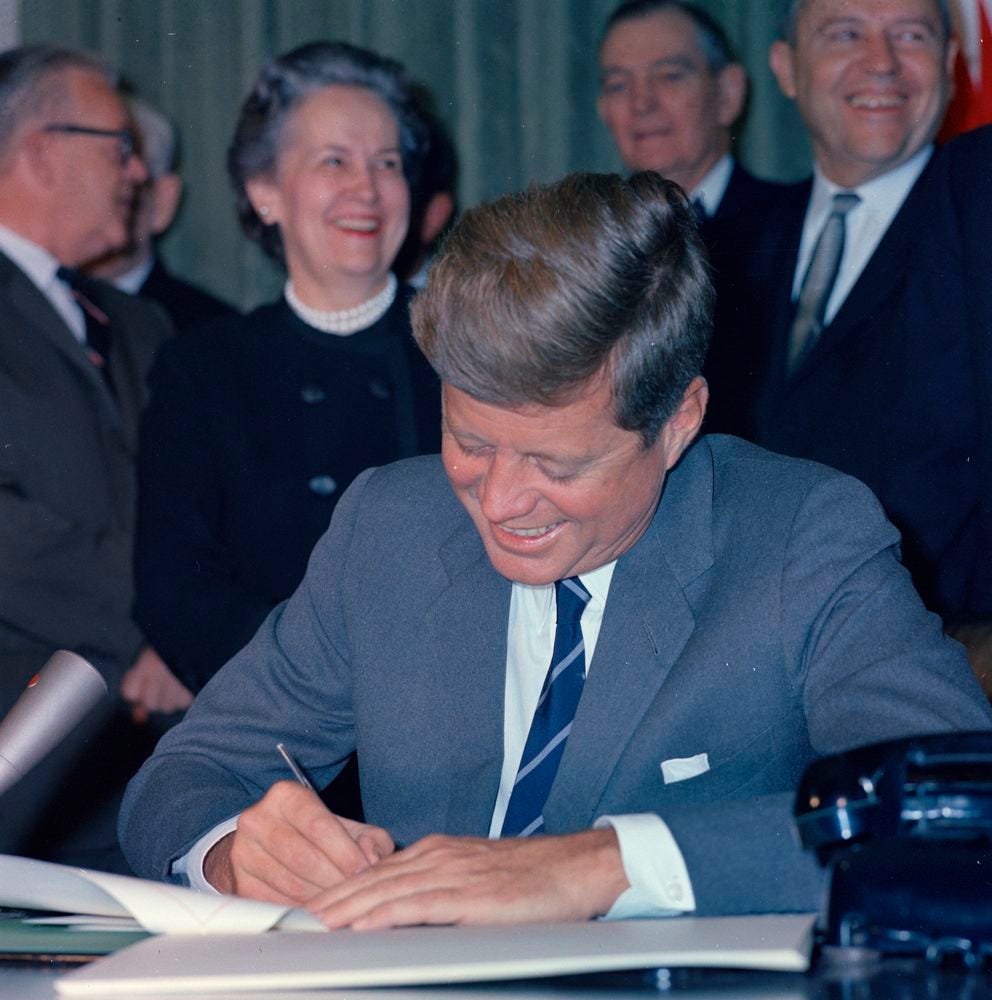
As they implemented state-wide community mental health services, New York and California prepared the way for President Kennedy’s ambitious plan to set up community mental health centers (CMHCs) throughout the United States. Federal regulations required that each CMHC serve a clearly defined “catchment area” comprising between 75,000 and 200,000 people. San Francisco itself contained five catchment areas. Mount Zion Hospital stood at the heart of the Westside catchment area—a neighborhood known for its density of psychiatric services. For a sliding-scale fee, any resident of the Westside catchment area could access the community mental health center, regardless of ability to pay.3
The key words in the 1960s were community psychiatry and social psychiatry. These referred to the local services offered by community mental health centers but also to the general view that social factors— e.g., socioeconomic conditions, group dynamics, community networks of support— were crucial determinants of mental health. Both aimed at overcoming the problems associated with chronic and repeated hospitalizations. At roughly the same time, Virginia Satir and others were pioneering techniques that placed the family at the center of the therapeutic process. After earning her master’s degree in social work from the University of Chicago in 1948, Satir later co-founded the Mental Research Institute in Palo Alto, California. NIMH grants and private donations supported MRI’s multidisciplinary projects, including the first family therapy training program led by Satir.
“The development of various milieu therapies [therapeutic communities] within the hospital,” announced clinicians at the Palo Alto V.A. in 1967, “has been one response to the problem of [institutional care]. The next logical step is to make the therapeutic milieu society itself.”4 During the 1960s, training programs began preparing psychiatrists and other clinicians for a range of community-oriented roles.5 Community psychiatry embraced methods used by social workers and public health officials: it linked psychological change to social change. Training often involved a field experience in which mental health professionals were expected to break out of their ”comfortable diagnostic and therapeutic roles.”6 The psychiatrists William Grier and Price Cobbs ran a psychiatric clinic in San Francisco and co-authored the book Black Rage (1968): “Too much psychotherapy,” they argued, “involves striving only for a change in the inner world and a consequent adaptation to the world outside.”7
Community mental health programs, subsidized by state and federal funds, expanded the employment opportunities available to psychologists and social workers. In fact, the so called “allied professions” were indispensable in staffing the new decentralized mental health programs. Operating on the principle that “mental health professionals can function in many community roles with little reference to their disciplines,” community mental health programs blurred the lines between the mental health professions. Program directors were encouraged to assign work tasks to any employee who could get results. Since psychologists, social workers, rehabilitation specialists, psychiatric nurses, and educators, as well as psychiatrists, could serve as program directors, some doctors reported to a nurse or social worker.8
The reorganization of California’s state hospitals in the early 1970s according to “management by objectives” principles had the effect of dismantling traditional hierarchies and endowing non-physicians with new administrative authority. On some psychiatric wards, treatment plans were decided by a vote of the clinical team, “suggesting that there was really no difference between the clinical judgment of a physician with a decade of experience and that of a student nurse on her first clinical assignment.”9
Some psychiatrists spoke against the trend toward unsupervised “lay” psychotherapy. But they were powerless to stop it. Neither psychiatrists nor psychologists could make a meaningful and legally defensible distinction between psychological “counseling” and psychiatric “psychotherapy.” Moreover, there was no evidence that MDs were better therapists than non-physicians. Joseph Wheelwright, the acting director of the U.C. Berkeley campus clinic, once commented on the effectiveness of Berkeley’s non-physician therapists: they were “neither more nor less effective therapeutically” than the MDs. Sometimes the psychologists and social workers even demonstrated an aptitude the doctors lacked. “The social workers were good at short-term therapy,” Wheelwright recalled, “while the psychiatrists were so ponderous that they creaked.”10
Competition from psychologists and social workers accelerated the disintegration of psychiatry’s professional jurisdiction. By the end of the twentieth century, roughly two-fifths of California’s mental health workforce consisted of MFTs (marriage and family therapists), sometimes called MFCCs (marriage, family, and child counselors). These were psychotherapists who offered brief psychotherapy along with “more intensive, long -term treatment.” There were nearly five MFTs, three social workers, and two psychologists for every one psychiatrist in California.11
Since the 1950s, the psychotherapeutic landscape has also become increasingly heterogeneous or “eclectic.” As the psychologists, social workers, and MFTs became independent practitioners of psychotherapy, so did countless unlicensed practitioners with little or no professional training. The diversification of the therapeutic workforce thus coincided with the diversification of therapeutic modalities, ranging from conjoint family therapy and encounter groups to primal therapy and neuro-linguistic programming. These new modalities were almost always faster and cheaper than psychoanalytic psychotherapy. Moreover, the counterculture’s anti-establishment bias worked to the advantage of new practitioners who were unencumbered by elite credentials and professional training.
In short, the demedicalization of psychotherapy made psychotherapeutic experiences more widely available and more diverse. In the 1940s and 1950s, psychoanalytic psychiatry had been an important vehicle for the dissemination of psychological ideas and psychotherapeutic practices. But the de-coupling of psychotherapy from medicine enabled an even wider exposure to psychological ideas and psychotherapeutic practices. Problems once treated exclusively by psychiatrists were now routinely treated by non-physicians. While the influence of the medical profession declined, the psychotherapeutic ethos prospered.
A note on sources: Complete citations can be found in Justin Suran, "Toward an Illusionless City: The Province of Psychiatry in Twentieth-century San Francisco" (Ph.D. diss., Univ. of California, Berkeley, 2003).
On the licensing of clinical psychologists, see Roderick D. Buchanan, “Legislative Warriors: American Psychiatrists, Psychologists, and Competing Claims over Psychotherapy in the 1950s,” Journal of History of the Behavioral Sciences 39, no. 3 (summer 2003): 225-249; Ames Fischer, “Nonmedical Psychotherapists: Influences of the Changing Pattern of Psychiatry,” Archives of General Psychiatry 5 (July 1961):29-33.
Raymond D. Fowler, “APA and the VA: An Enduring Partnership,” APA.org 33, no. 8 (2002), https://www.apa.org/monitor/sep02/rc; Rodney R. Baker and Wade E. Pickren, “Veterans Administration Psychology: Six Decades of Public Service (1946-2006),” Psychological Services 3, no. 3 (2006):208-213, doi:10.1037/1541-1559.3.3.208.
Gerald N. Grob, From Asylum to Community: Mental Health Policy in Modern America (Princeton: Princeton UP, 1991), 227, 238; “Psychiatric ‘Catchment’ Areas to Be Set Up,” SFMS Bulletin 41, no. 4 (April 1968): 21-22; NCPS Newsletter, 14 Oct. 1968, Northern California Psychiatric Society Archive; Medical Staff Newsletter 16, no. 5, May 1968, Mount Zion Hospital Collection.
David N. Daniels, Arthur B. Zelman, and Joseph H. Campbell, “Community Based Task Groups in Recovery of Mental Patients,” Archives of General Psychiatry 16 (Feb. 1967): 215.
Training programs sometimes caused a kind of “role stress,” when, for example, M.D.s failed to see why they should perform duties traditionally assigned to neighborhood social workers.
Department of Mental Hygiene brochure, “Bulletin of the Center for Training in Community Psychiatry at Berkeley,” June 1963, Portia Bell Hume Papers; Conference paper, “The Need for Training in Community Psychiatry,” 20 May 1961, Portia Bell Hume Papers; Mount Zion Hospital Bulletin 7, no. 11, Nov. 1959, Mount Zion Hospital Collection; M. Robert Harris, Betty L. Kalis, and Lida Schneider, “Training for Community Mental Health in an Urban Setting,” American Journal of Psychiatry 124, supp. to no. 4 (Oct. 1967): 22-24, 26.
William H. Grier and Price Cobbs, Black Rage (New York: Bantam, 1969), 150.
M. Robert Harris et al., “Training for Community Mental Health in an Urban Setting,” 25; NCPS Council Minutes, 9 March 1960, Northern California Psychiatric Society.
Richard R. Parlour, “The Reorganization of the California Department of Mental Hygiene,” American Journal of Psychiatry 128, no. 11 (May 1972): 1388-94.
“From Logos to Eros,” 1; Joseph B. Wheelwright, “An Approach to Mental Health at the University of California,” in Health at the University (Paris: International Universities Bureau, 1954), 34.
Tina McRee, Catherine Dower, Bram Briggance, Jenny Vance, Dennis Keane, and Edward O’Neil, “The Mental Health Workforce: Who’s Meeting California’s Needs?” California Workforce Initiative at the UCSF Center for the Health Professions, Feb. 2003, pp.77-78.